



In recent years, enterprise events are making a comeback. The events industry has evolved from in-person gatherings to hybrid events, which blend in-person and virtual elements.
Mobile apps for events have been pivotal in enhancing these event experiences by streamlining tasks like registration, guest check-in, networking, and content delivery. The shift from traditional event planning methods to digital platforms, such as event marketing apps and software, has made organizing enterprise events more efficient and user-friendly.
Event apps and software help event organizers manage large crowds without performance hiccups, offering the flexibility to scale the event size up or down as needed. Organizers can leverage a mobile event app to streamline tasks like registration and attendee engagement, improving overall event experiences. These digital tools make it easier to adapt to changing event needs on the fly.
Organizers should prioritize features like customizable event pages and event registration forms when looking for an enterprise event app. Email templates are also vital for effective communication. These features streamline event management and allow for seamless integration of the company's branding elements.
As you’re evaluating different enterprise event apps, organizers should look for one that can handle multiple events simultaneously (if your company hosts numerous events simultaneously). Also, look for an event app with a centralized dashboard for a simple overview of all your event metrics.
This streamlined functionality allows for more efficient event management, giving you a real-time snapshot of all in-person, hybrid, and virtual events. An all-in-one approach improves the event management experience and user experience for planners and attendees.
Organizations should choose an enterprise event app that integrates easily with CRM systems, email marketing platforms, and other enterprise tools for effective event planning. The app should also offer API access for custom integrations to streamline functionality across various aspects of your event management process, which can significantly impact user experiences and allow for real-time data sharing and personalized attendee engagement.
For example, Splash’s enterprise event management platform has robust integration functionality, allowing organizers to get real-time data and integrate it with their chosen CRM.
Event organizers seeking a top-notch enterprise event app should prioritize features like real-time analytics on attendee behavior, ticket sales, and engagement metrics. The platform should also offer the functionality to export these reports for post-event analysis. This all-in-one approach streamlines event planning and helps you prove the ROI of your event programs and optimize future events based on actual data.
Event organizers looking for the best enterprise event app should prioritize one with interactive features like live polling, Q&A sessions, and dynamic agendas.
Additionally, the app should boost user experience with networking tools, including breakout rooms, attendee matching, and virtual meetups. An event platform with these capabilities can enhance in-person and online event experiences, fostering better attendee engagement and personalized interactions.
When evaluating enterprise event apps, organizers should focus on finding one that offers robust support for hybrid events, catering to in-person and virtual attendees alike. Look out for a mobile event app that includes features that help attendees have a smooth user experience during the event. This approach can improve attendee experience and attendee engagement regardless of the event format.
Enterprise businesses are often scrutinized regarding the security of their attendee data. For this reason, event organizers must choose an event app or platform with robust security and compliance tools. Features like data encryption, GDPR compliance, and role-based access controls are essential for safeguarding attendee information and secure payment processing. These features will minimize legal liability and risk and build trust, enhancing user experience across various event formats like in-person, hybrid, and virtual events.
For busy attendees on the go, an enterprise event app needs to offer a mobile-responsive design or a dedicated mobile app. Key features like mobile check-in, push notifications, and interactive mobile agendas streamline the user experience and enhance attendee engagement. These functionalities make event planning more efficient and allow a more personalized experience in in-person and online events.
An effective enterprise event app should include features that facilitate guest-to-guest interaction and event-host communication. Real-time messaging or chat capabilities enhance attendee engagement by allowing conversations among attendees, exhibitors, and organizers. Built-in email marketing tools streamline event planning by making it easier to promote the event and send updates, creating a comprehensive and interactive event experience.
For example, Splash’s email automation tool helps increase event engagement and attendance while saving event organizers time.
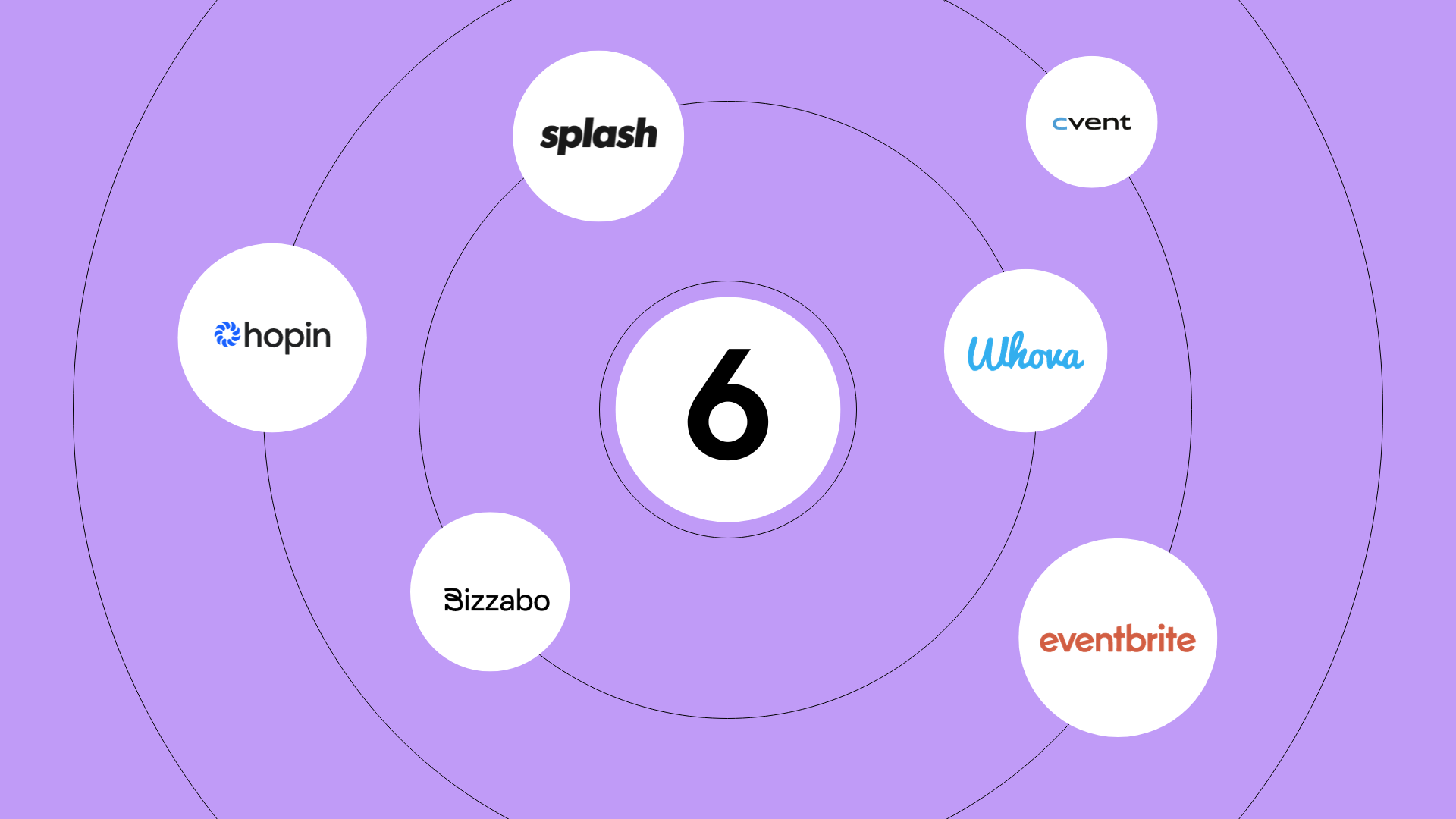
Splash is a comprehensive event marketing platform designed for creating branded and highly customizable, mobile-friendly event experiences. Some of its best event features include event promotion tools, ticketing, on-site check-in, and an app for event organizers. Known for its user-friendly design tools and ease of use, Splash allows event organizers to create visually appealing event pages that enhance attendee engagement. The platform also provides real-time analytics, helping organizers measure the success of their events regardless of the event format, whether it’s an ancillary event at an expo or a private VIP dinner.
Splash offers a free basic plan for simple events and premium plans for more complex needs, providing options for a wide range of budgets.
Cvent’s enterprise event marketing app is designed to make managing complex event programs remarkably easy for large organizations. The platform offers an intuitive, unified experience for planning, marketing, and executing in-person events of any size—from major conferences to small, repeatable field marketing events. With features like drag-and-drop design, customizable templates, and robust branding controls, marketers can quickly launch events that are on-brand and engaging.
The Cvent event app streamlines every stage of the event lifecycle, including registration, agenda management, attendee engagement, and real-time updates, all while integrating seamlessly with your existing marketing tech stack.
Eventbrite is a simple event management platform with various features. It includes an online event registration and ticketing solution, CRM integration to enhance event organization, discoverable event pages for the public through their platform, and a user-friendly mobile app for on-site event management.
Eventbrite is best suited for small businesses selling tickets for events or teams who don't have the headcount or resources to execute a full-scale event program.
Regarding pricing, Eventbrite charges a service fee for every paid ticket and add-on you sell. If your tickets are free, you don't pay any ticketing fees. Depending on your payout country and payment method, payment processing may require additional fees.
Related article: 4 Best Eventbrite Alternatives for Streamlining Event Management
Bizzabo is an event management system that aids organizers in creating, managing, and promoting professional events. It offers various functionalities like event registration, ticketing, CRM integrations, guest management, email marketing, and promotion tools.
Although Bizzabo might work as an event management solution for some, it has limitations in event page editing and lacks automation in areas like email follow-up. With only five templates available, Bizzabo would work best for teams with dedicated resources with CSS and HTML expertise.
Bizzabo’s pricing starts around $15k, but plan on paying even more if you need add-ons such as integrations or registration credits or if you want to unlock virtual events.
Related article: 6 Best Alternatives to Bizzabo for Event Management
Whova is an event management solution that supports both virtual and hybrid events. Features like event reminder notifications, integration into Salesforce and other CRM tools, and event check-in make Whova an OK option for event organizers.
However, users may find Whova’s customization capabilities limited compared to more flexible event management platforms, and users report that the mobile app can be challenging to navigate. Their pricing is only accessible upon request.
Hopin is a primarily virtual event management platform with its best event features, including engagement tools like live streaming, real-time engagement, and interactive features, and it includes a free plan option.
Hopin has several drawbacks, one of the most significant being that event organizers do not own the guest contact info outright. Another is that although Hopin offers tiered pricing, it charges extra for large events. They also have limited options for emails and event templates, impacting user experience.
Hopin is ideal for businesses that prioritize virtual events over in-person. You should also probably skip Hopin if you don't have a team that can write their own custom CSS, HTML, and Java.
Related article: The 9 Best Hopin Alternatives for Virtual Conference Management
A top-notch mobile event app can dramatically elevate the attendee experience by featuring real-time messaging and other communication features. This functionality connects organizers, exhibitors, and attendees, facilitating seamless communication for both virtual and in-person events. The app can also boost attendee engagement through interactive features like polls and Q&A sessions, offering a personalized event experience.
Choosing an event app with social media integration can supercharge the event experience in several ways. It amplifies event reach and boosts attendee engagement by making sharing and interaction effortless. This streamlined approach enhances both event promotion and the on-site experience, creating a cohesive and interactive atmosphere for everyone involved.
When selecting an enterprise event app, prioritize competitive pricing, responsive customer support, and smooth integrations to enhance event planning efficiency. Prioritize attendee engagement features like interactive elements to streamline your event. Also, make sure the event app is compatible with multiple platforms like Android and iOS for broader accessibility.


