





According to Skift Meetings research, across the board, event attendance numbers are down and trending at 65 percent below 2019 numbers.
In addition to the obvious effects of the pandemic, other leading factors cited by Skift are:
The article goes on to paint a pretty grim picture, one that includes plummeting attendance to conferences and measurable disinterest in virtual events. Notably, the events referenced in the article are large, multi-thousand attendee events and it got us thinking — are we seeing the same patterns in data at smaller events?
While big conferences like Dreamforce get all the headlines, it’s the repeatable, smaller gatherings that represent the pillar of the modern marketing playbook. Unlike the large events where attendees are often anonymously walking the trade-show floors, smaller events bring audience and stakeholders closer together, fostering more intimate conversations that build trust. Setting up a small event is much easier, but getting small events to scale has traditionally been the challenge. Luckily for today’s event marketers, it’s a problem that we solve at Splash. As a result, our data can look at thousands of small events and distill patterns of performance.
And these types of events are — by and large — thriving. It’s just underreported.
At Splash, our platform helps companies like Amazon, Slack, Salesforce, and Burton Snowboards host tens of thousands of events every year. This gives us unique insight into the kinds of events businesses are planning and executing, and why.
While the Splash platform sees its share of tentpole events and big conferences, most of our clients’ go-to event strategies are heavy on scaling these intimate gatherings of 100 people or fewer.
Why is that? Because they work.
Smaller events offer attendees more personalized experiences, more intimacy, and more opportunities for connection. But for the event organizers, they also offer more focused and tailored programs and agendas, the ability to curate attendees in a targeted way, and more meaningful interactions that can drive pipelines, foster engagement and accelerate deal processes.
In other words, small events deliver real business outcomes in ways that larger events aren’t designed to do.
These events, of course, still face challenges — but also tell a much more optimistic story of the future of in-person events.
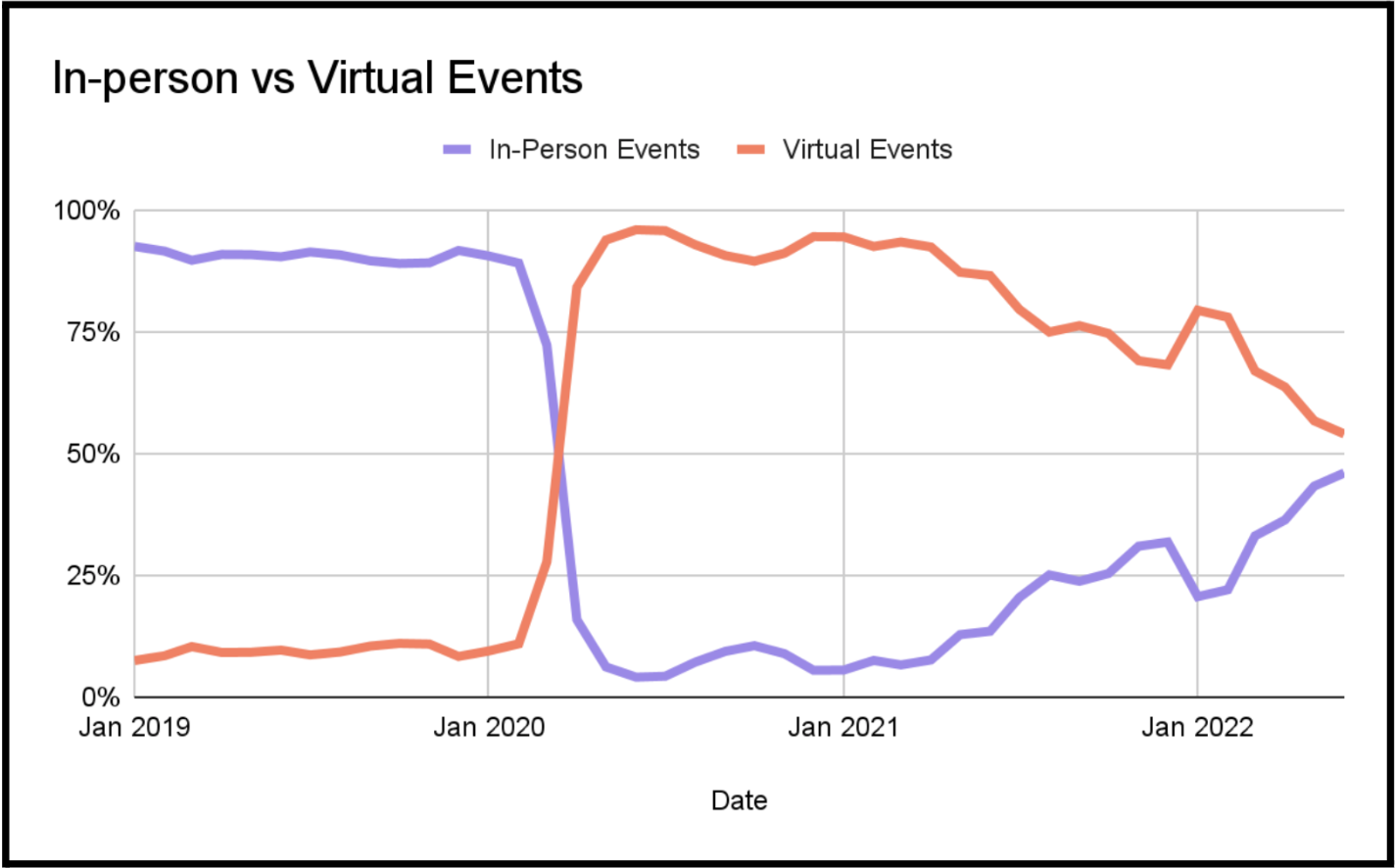
As one would imagine, IRL events all but disappeared in 2020 and early 2021.
Whereas in 2019, 82% of events occurring in Splash were in-person, that number dipped to 5% in the summer of 2020.
In-person events are on the rebound: in 2021 they grew to 16% of events on the platform — and in June of this year they climbed all the way to 46%.
By our projections, by late summer, IRL events could exceed virtual events for the first time since March of 2020.
And with some luck, we can be at 60/40 IRL by the end of 2022.
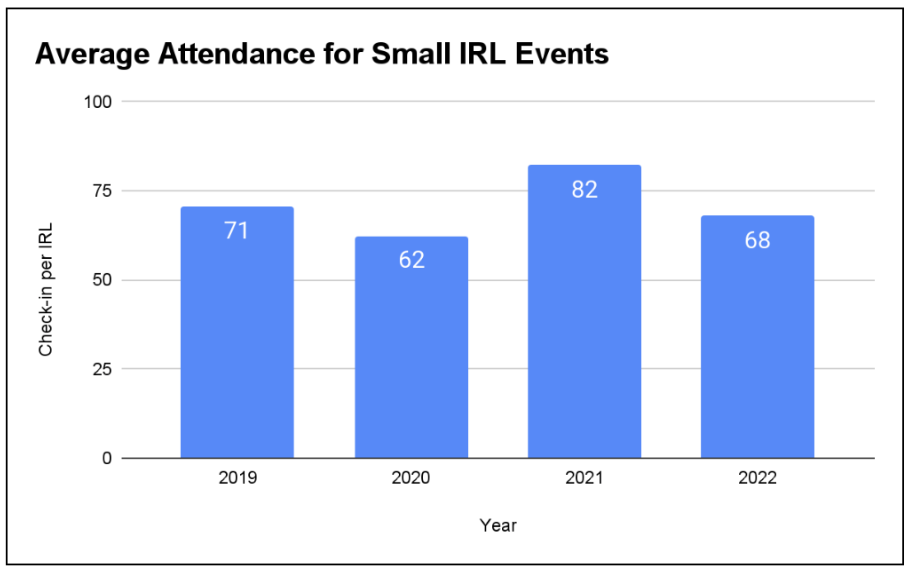
Just as encouraging as the return to in-person, these smaller events are looking a lot like they did pre-pandemic — mega conferences not included.
The average number of attendees to in-person events dropped by 13% in 2020, more staggering when you consider how scarce in-person events were to begin with.
Today, the average number of live attendees at IRL events in Splash is only 4% below 2019 highs, which amounts to a difference of just 3 people on average.
Even pre-pandemic, a shift was happening in the world of events, which was pretty consistent with changes in technology, culture, and content consumption.
Gone are the days of 30 million people tuning in to a Thursday episode of Seinfeld. Content today is ultra niche, highly personalized, and available on-demand. People prefer it this way, so it’s logical they expect the same of their events.
Giant conferences with limited opportunity for intimacy or connection are becoming anachronistic.
Combine that with the uneasiness around traveling and packing into large venues, and it makes sense why large events have fundamentally changed.
Instead, businesses are embracing smaller events that can meet attendee expectations and deliver tangible business outcomes and positive ROI.
Considering the trends, smaller events are outperforming their behemoth counterparts. Plus, they’re far easier to pivot if things get hairy.
We see it every day with Splash. The top marketers today are scaling small wins because it’s what their audience wants and it’s better, smarter business.


